November 2026 Recap – Seven Portals, No North Star
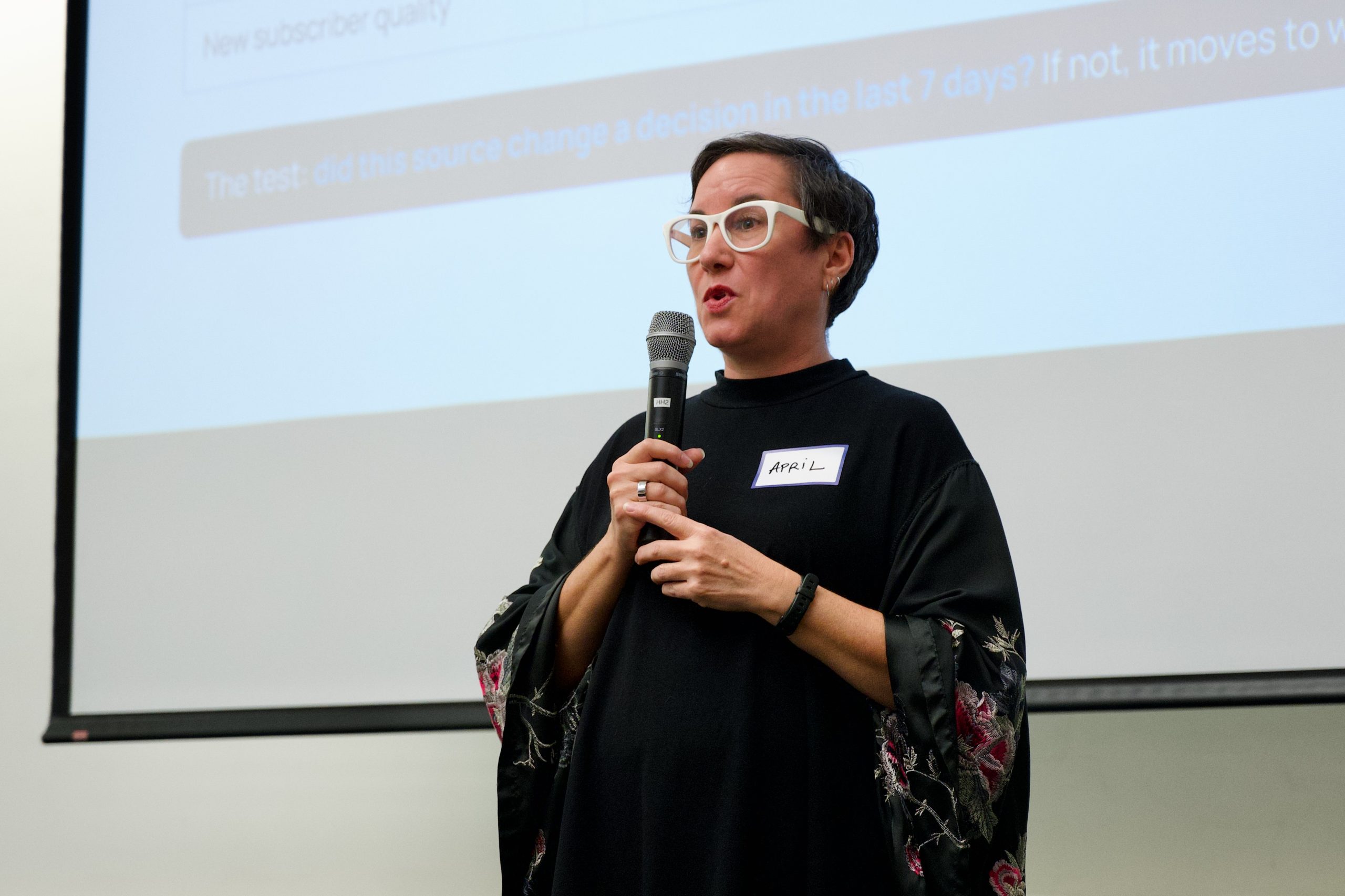
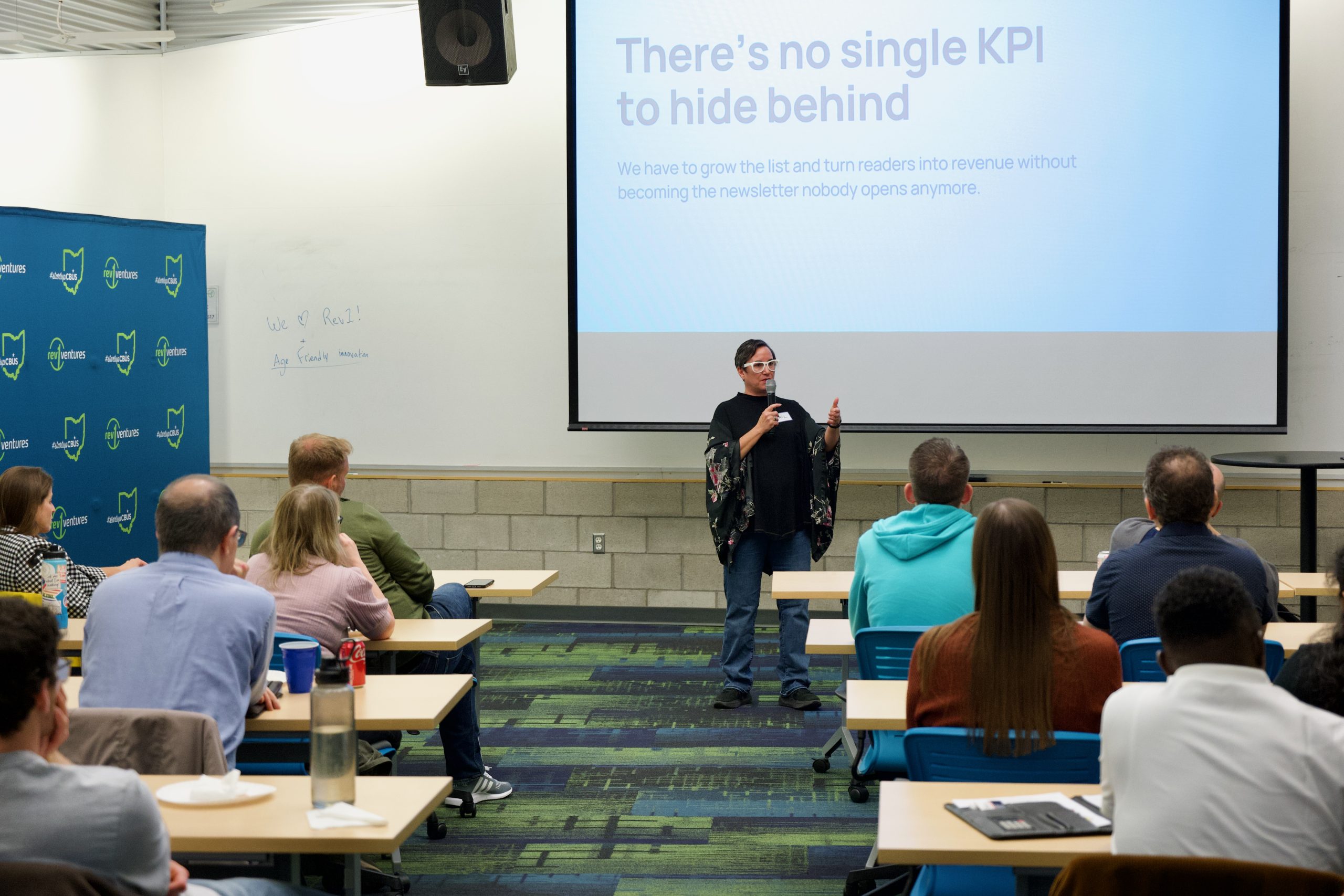
Our November event featured April Wilson on a day in the life of an analyst. In a world full of hype and its peddlers, April got real with us. She talked about her workflow and what it’s actually like to wake up early every morning and try to make sense of the numbers. How do you reconcile numbers from seven different portals when they are all reporting on different things at different times, and there’s no single KPI they all push on?
You reconcile and balance these seemingly competing and sometimes contradictory numbers by understanding two things:
- Every win likely has a counterbalancing cost. If you increase the number of ad placements on your site you might drive more ad revenue, but decrease your signups. If you add a bunch of poorly sourced emails to your list you might increase your subscriber count, but decrease your deliverability.
- Your numbers are probably lying to you at least a little, understand how and where to make them useful. If your conversion numbers show poor ROAS numbers on iPhone users, remember that Safari degrades cookies. If you are watching revenue from affiliate dashboards, remember that revenue reporting may be delayed. Know your data sources and their caveats.
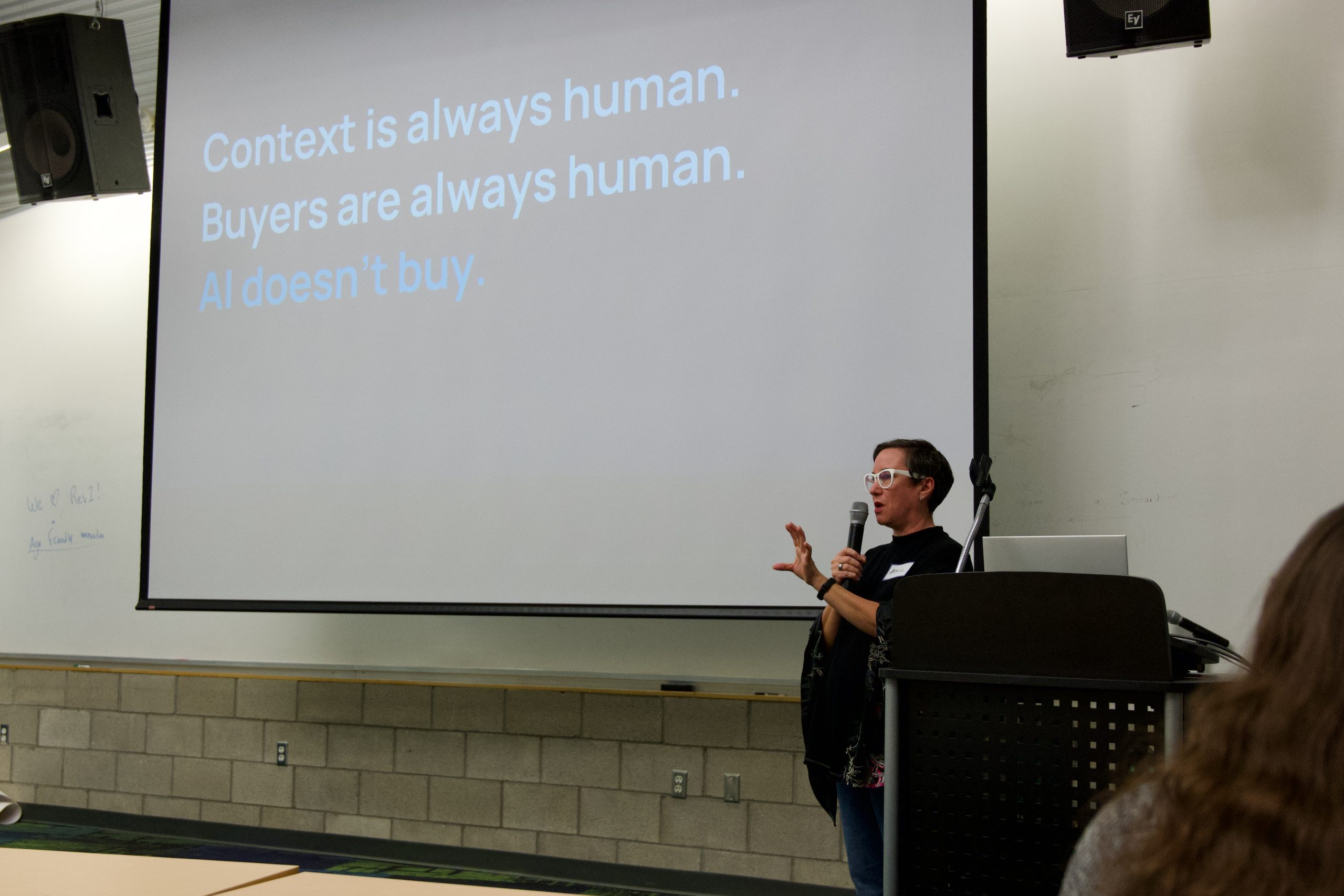
April also talked about how & when to use AI. She is of the strong opinion that editorial content should continue to be created by humans. AI is great to help “do the chores” and improve efficiency, but that you risk losing your brand voice and your connection with your readers when you give up the writing itself to the AI.
She is also a fan of making AI tell you how certain it is about the answer it is giving you. To that end, she shared the custom instructions she gives hers:
- You are my advisor, not my assistant. Your job is accuracy, not agreement.
- Rule 1: Do not open with agreement or praise. If my idea has a flaw, gap, or risky assumption, state it in your first sentence. If my idea is solid, say so plainly in one line and move on. Never invent objections just to disagree. I will tell you next what gaps, flaws or risks to disregard, and which to keep.
- Rule 2: Rate your confidence on key claims. Use [certain] for hard evidence, [likely] for strong inference, and [guessing] when filling gaps. If most of your reply is guesswork, say so upfront. A guess should never be presented as fact.
- Rule 3: Never use filler praise. It makes a wrong answer feel right.
- Rule 4: When I’m wrong, use this structure. “I disagree because [reason]. Here’s what I’d to instead: [alternative/s]. The risk in your approach is [specific downside/s].”
- Rule 5: Lead with the uncomfortable truth. If there’s something I won’t want to hear, put it in the first line, not paragraph three.
- Rule 6: No warm-up paragraphs. Start with the most useful thing you can say.
- Rule 7: If I push back, hold your position unless I give you new facts or your claim was tagged [guessing].