October 2026 Recap – Beyond the Numbers with the Mid-Ohio Food Collective
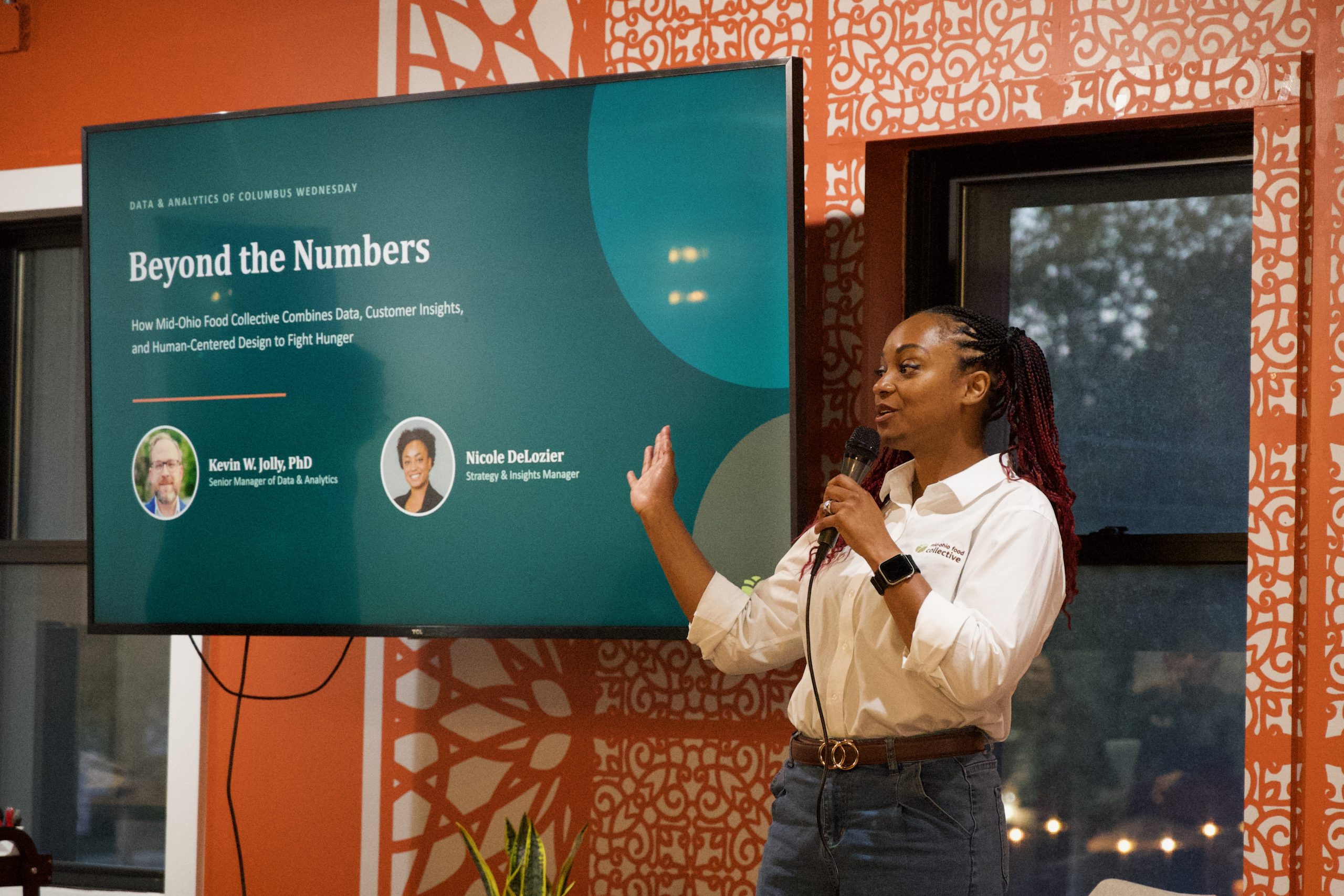
At this month’s event, Nicole DeLozier and Kevin Jolly from Mid-Ohio Food Collective scratched the surface of some of the data and analytics work they’re doing—taking a human-centered design approach and then figuring out how data can be collected and analyzed to support it.
As an organization that sources and distributes a mind-boggling amount of food through a diverse set of mechanisms across 20 (20!) counties in Ohio, they have a lot of data and a range of data systems (FreshTrak was referenced a few times—its history and capabilities are fascinating—but was not the focus of the talk).
MOFC is deeply committed to reducing food insecurity, but beyond simply “getting food to people who need it,” they are aim to do that in a way that preserves the dignity of their clients and provides a positive client experience throughout the process.
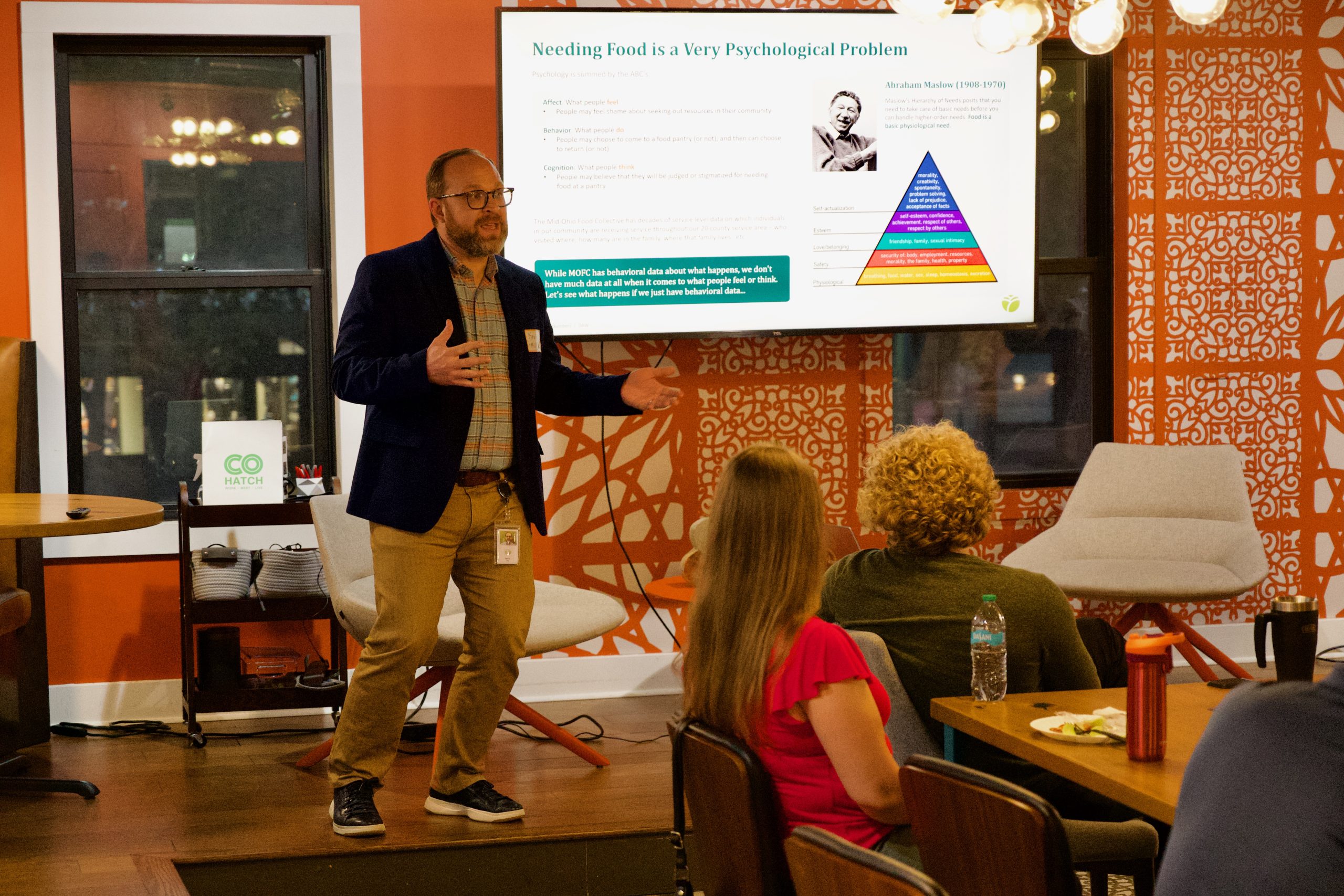
Kevin tied in Maslow’s Hierarchy to the talk, as well as showed the contrast of two (anonymized!) families and their cumulative food support needs over time—a family whose needs are steady versus a family whose needs fluctuate. He pointed out that, while this data makes clear what happened with the families’ use of MOFC services, it does not tell them why their needs varied.
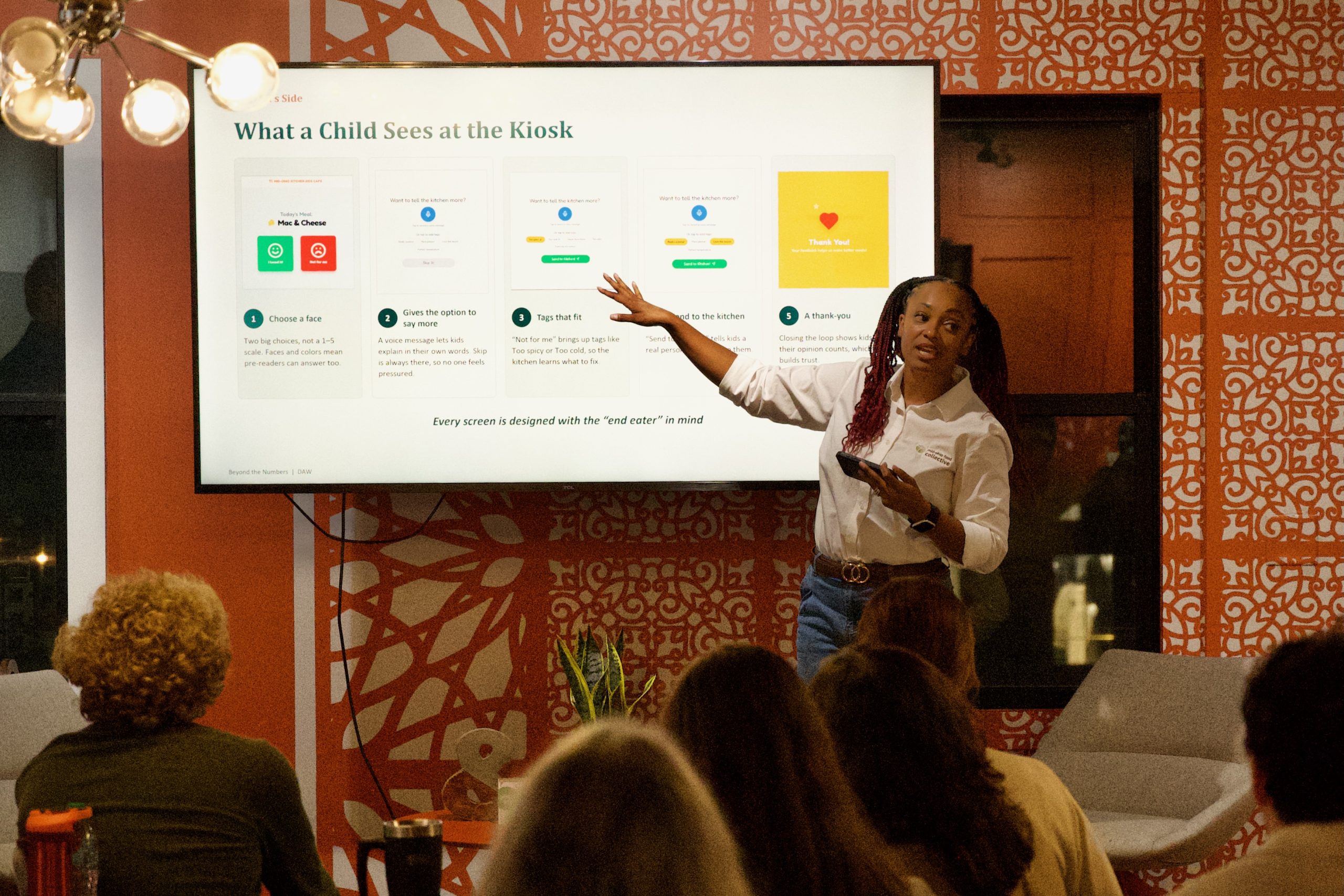
Nicole highlighted the many different mechanisms MOFC has put in place to collect intelligence qualitatively, from focus groups to 1:1 interviews to a customer advisory council to co-design workshops. She also described a pilot specifically focused on an opportunity within the Mid-Ohio Kitchen’s Kids Café program: moving beyond “delivering nutritious meals” to reducing food waste while improving the client experience by collecting data directly from the kids as to what foods they liked, which ones they didn’t, and why. The mechanism? A simple kiosk with two buttons: an “I loved it” green smiley face and a “Not for me” red frowning face. That data—as well as optional voice notes providing more detail—gets fed right back into the kitchen so they can get a better understanding of how to improve the final meals (and reduce food waste in the process).
Kevin focused on the work he’s done to scrape and enable access to Google Reviews data:
- What do reviewers say about the cleanliness of the facilities?
- What is the experience of first-time clients?
- Where are the days/hours of operation hindering access?
- What does thanks/gratitude look like across different populations?
That data—publicly available, but being made accessible for exploration through his work—is being opened up to others to explore on their own.
It was a fascinating look at a couple of applications of creativity and focus driving innovative solutions!
Nicole and Kevin’s slides from the event are available here.
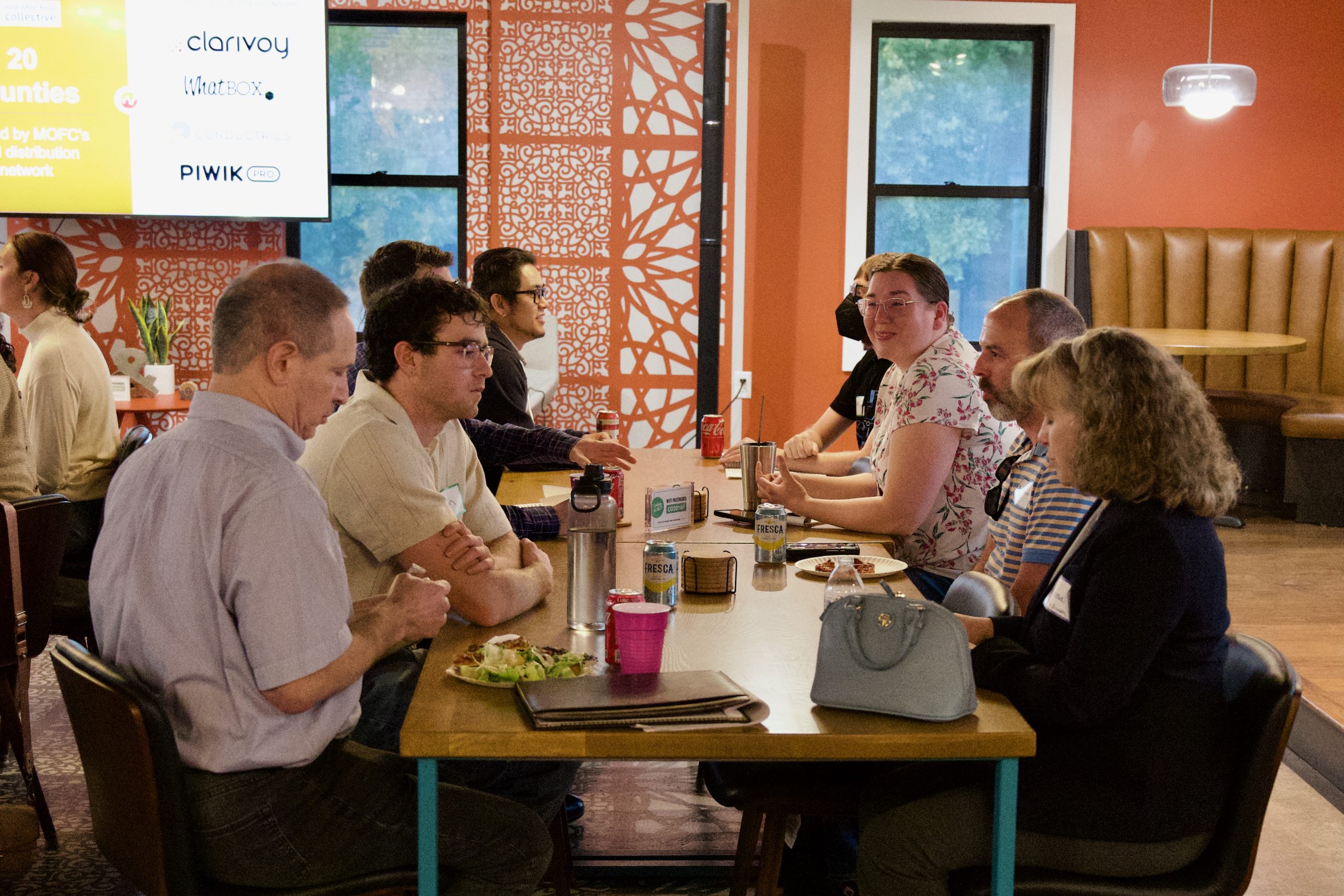
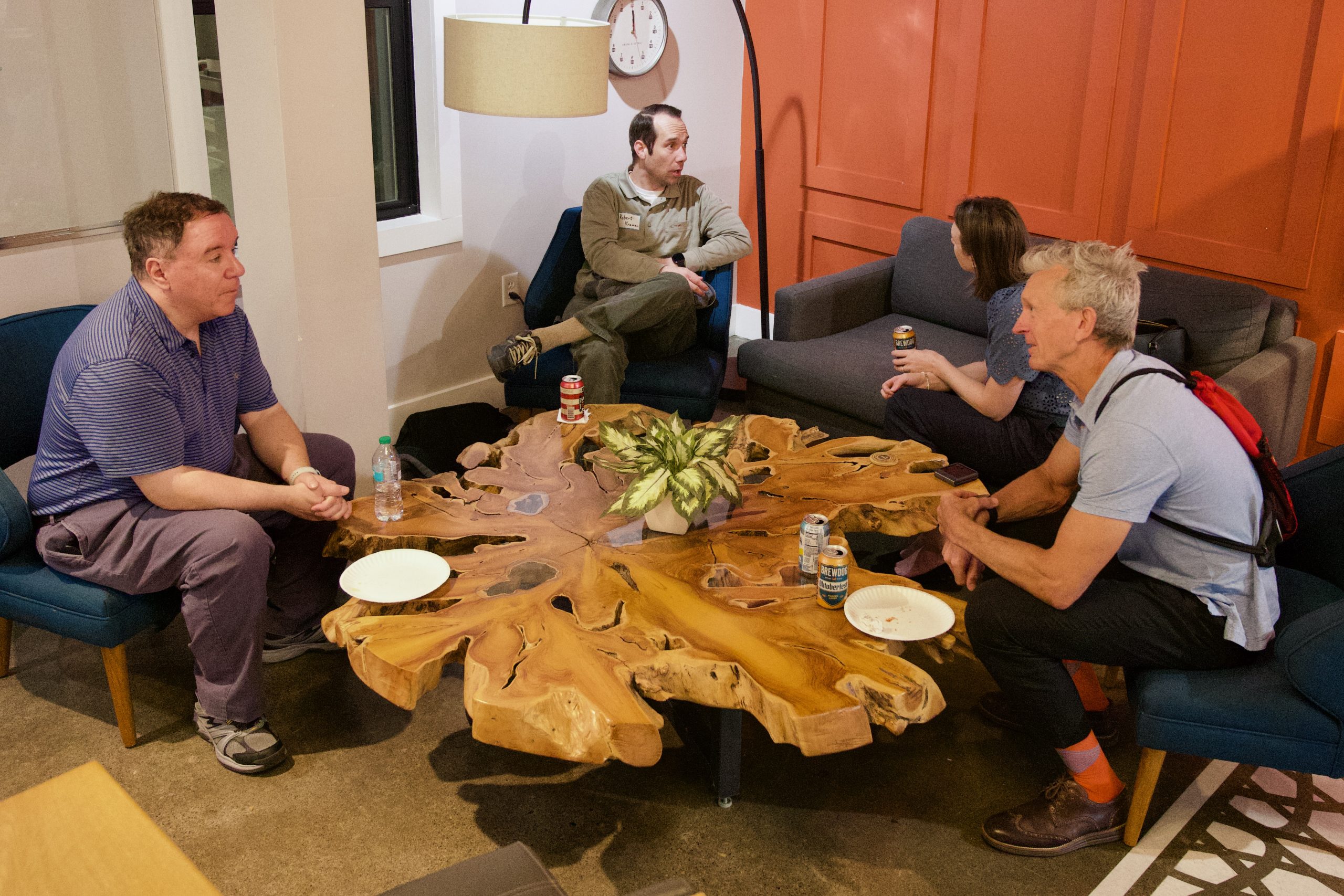
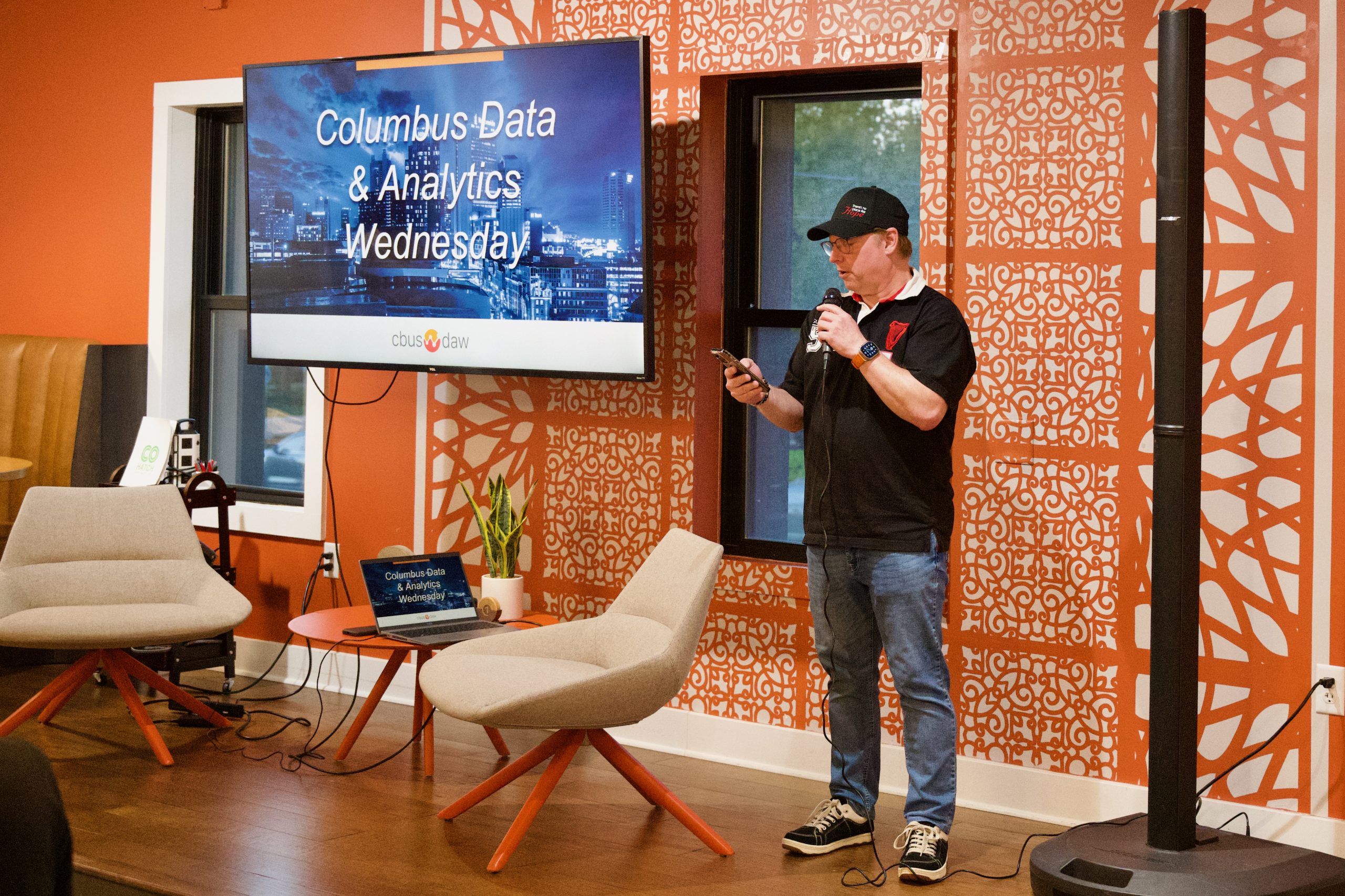
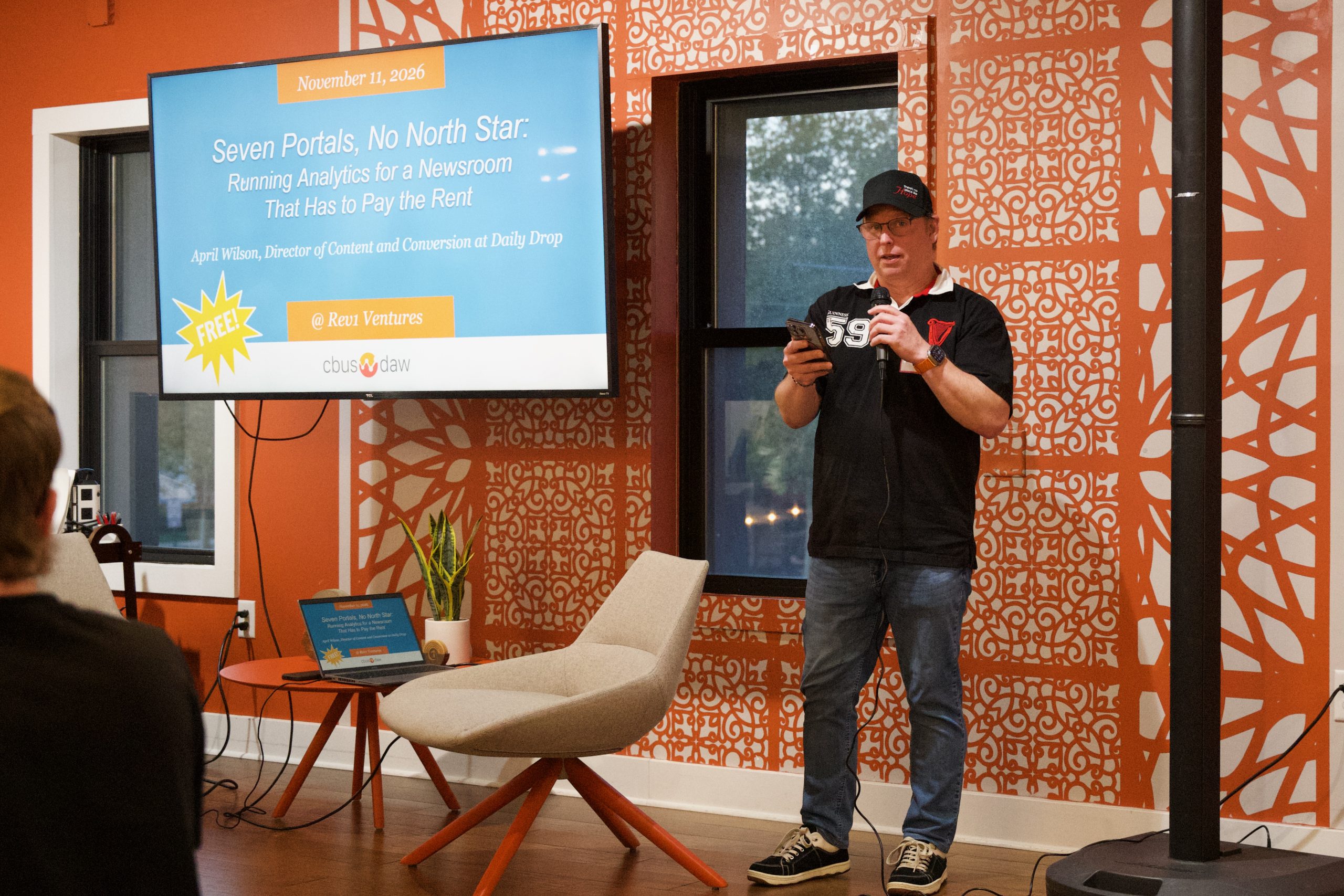
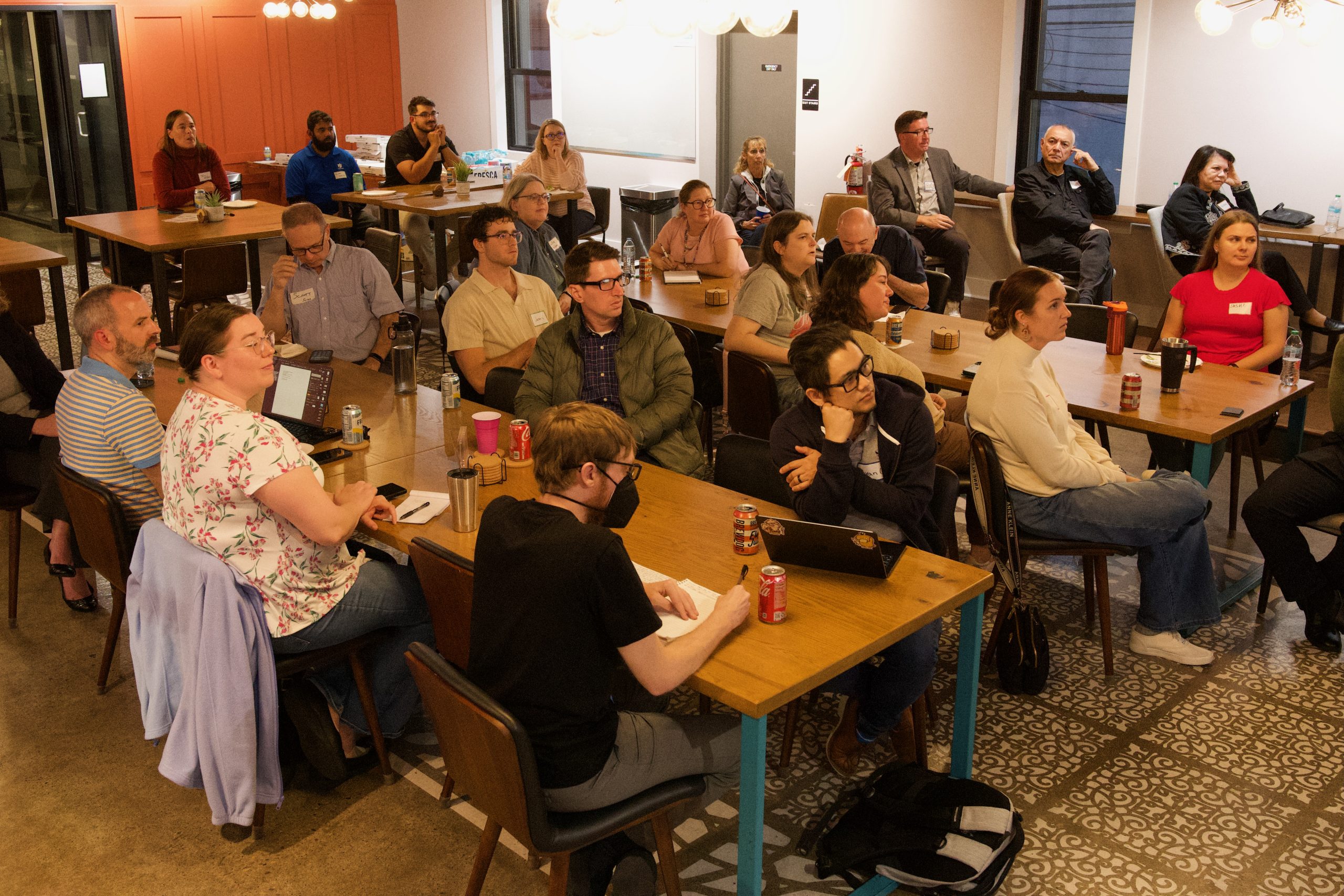
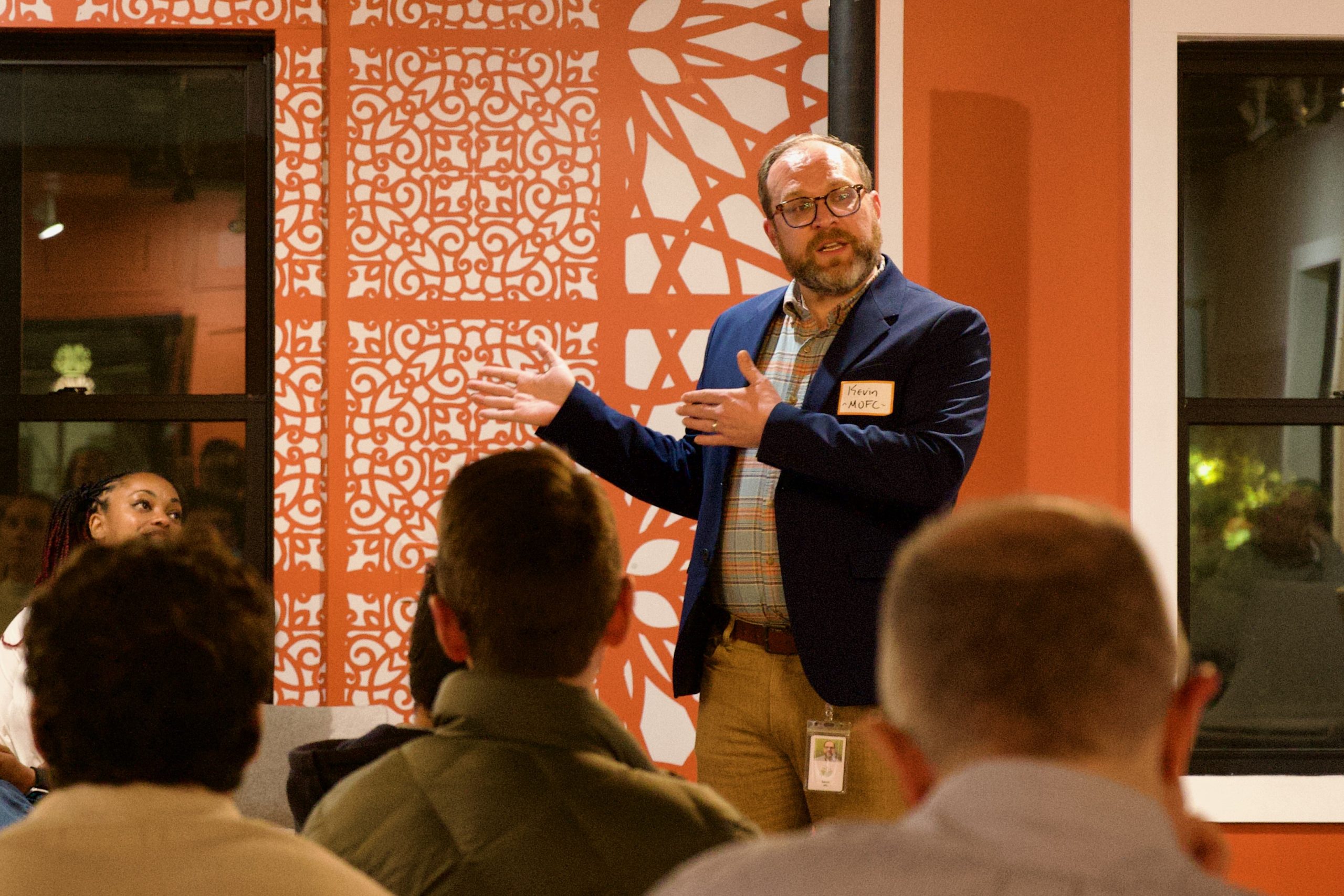
And, of course we’ve got some pics of the event. A lively and engaged crowd, as usual!